Missed the flop? That doesn’t mean you have to fold.
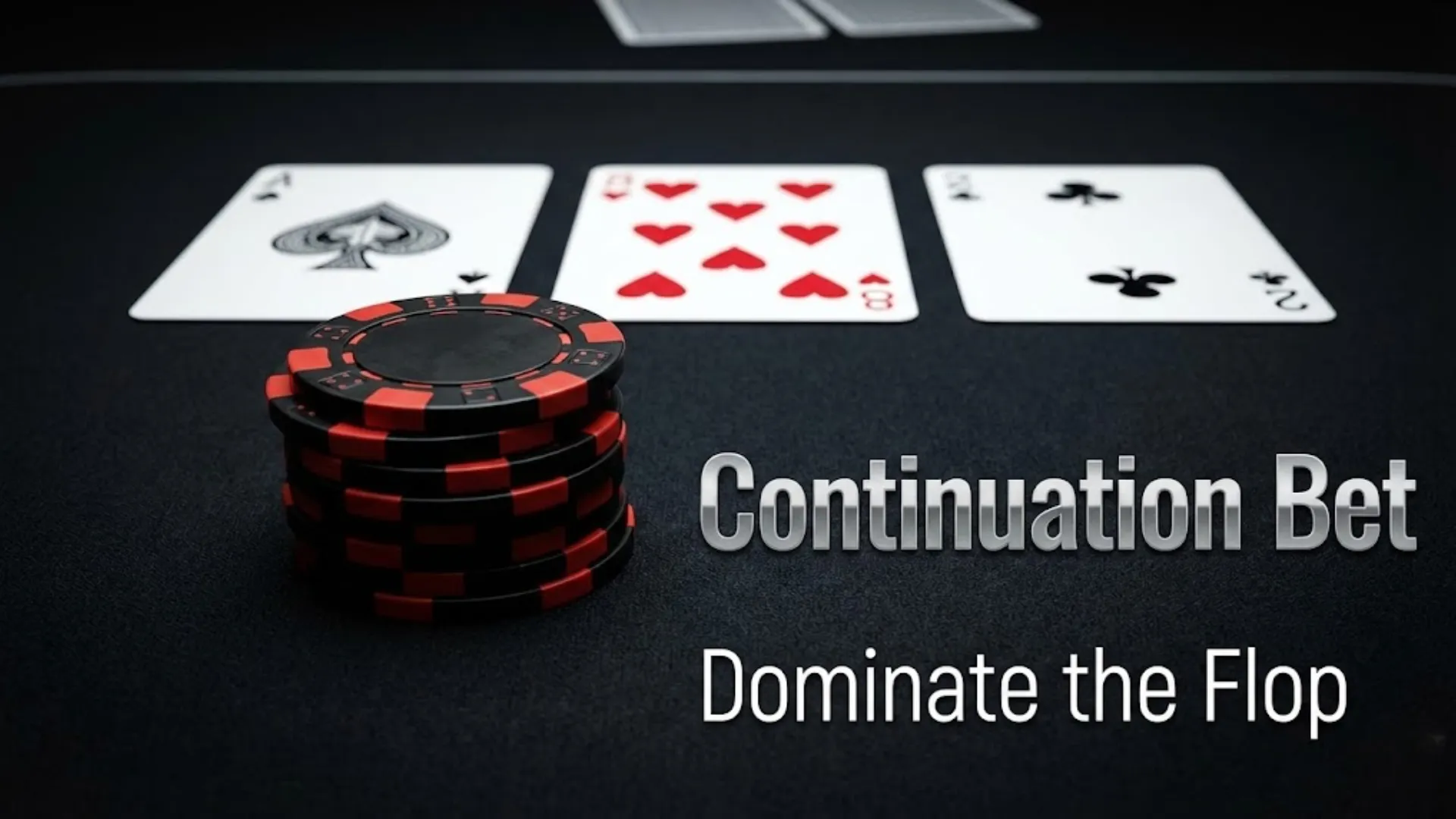
In No Limit Hold’em, you will miss the flop about 2/3 of the time. The difference between a losing player and a winning regular is often how they handle these situations. The Continuation Bet (C-Bet) is your primary weapon to turn “air” into profit.
1. What is a C-Bet?
The definition is simple: You were the aggressor pre-flop, and you continue to bet on the flop.
This is a display of strength. Because you raised pre-flop, opponents assume you have a strong hand like AA, KK, or AK. Even if you hold absolute garbage, you can leverage this “Range Advantage” to force folds and collect the “Dead Money” in the pot.
2. Board Texture: Know When to Fire
You cannot C-Bet 100% of your hands. Your success rate depends entirely on Board Texture. You must determine if the flop favors your range or your opponent’s range.
Strategy: This is your playground. Your range hits this board hard (Ace-high). You can C-Bet here with high frequency (70%+) using a small size (33% pot) to deny equity cheaply.
Strategy: Be careful. The pre-flop caller has many more 89s, 78s, and set combos than you do. You should Check Back often. If you do bet, use a large size (75%+) to charge draws.
3. Sizing: How Much Should You Bet?
Don’t just auto-click “Half Pot.” Modern GTO strategy dictates that your bet size should reflect your advantage.
Goal: Efficiency. You get the same folds from trash hands (like K-high) whether you bet 33% or 66%. Risk less to win the same amount.
Goal: Protection and Value. If the board is draw-heavy, you must charge your opponent a premium to see the next card. Don’t give them cheap odds to outdraw you.
4. The Trap: Multi-way Pots
Golden Rule: Play honest in multi-way pots.
If 3 or more players see the flop, your C-Bet frequency should drop dramatically. The math is simple: more players mean a higher probability that someone hit the flop. Bluffing into a crowd is the fastest way to burn chips. If you don’t have a strong hand or a strong draw, just check.
Frequently Asked Questions (FAQ)
Need a Softer Field?
Theory is useless without practice. PokerOffer provides access to exclusive platforms with softer player pools where C-Bets work more often. Start exploiting weaker players today.
Get Exclusive Access