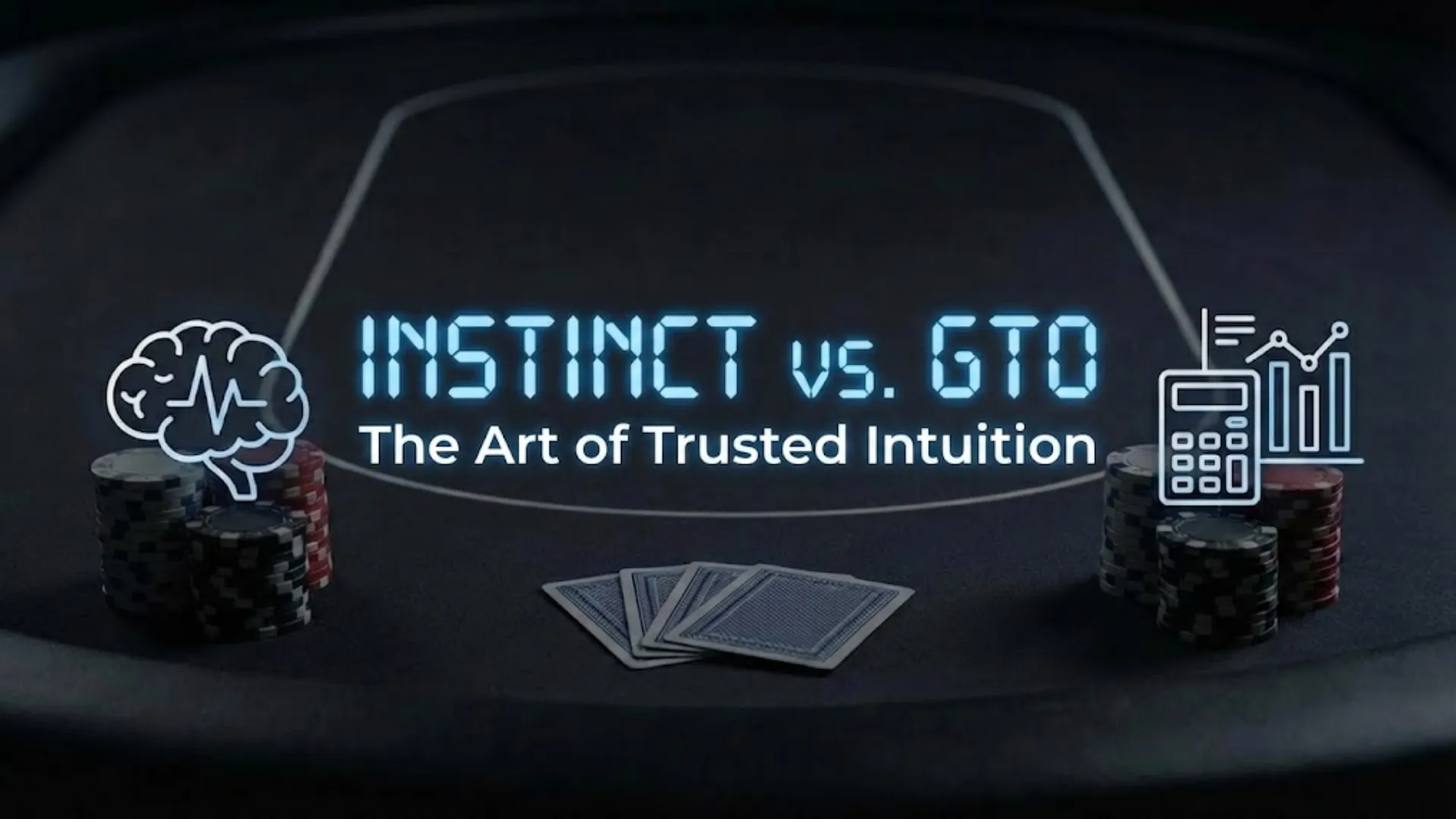
Poker Intuition vs. GTO: The Definitive Guide on When to Trust Your Gut
In the solver era, many players are told to ignore their “feelings” and obey charts, as if poker were either pure math or pure guesswork. In reality, winning poker is information processing: combining hard numbers with pattern recognition to make the best decision possible in limited time.
Elite professionals do not treat instinct as magic; they treat it as subconscious pattern recognition built from thousands of studied hands. The real skill is knowing when a gut feeling comes from trained experience and when it is just emotional noise, so that intuition and GTO work together instead of fighting each other.
The Science Behind Poker Instinct
Psychology research often describes two thinking modes: a fast, automatic “System 1” and a slower, deliberate “System 2.” System 1 is intuitive and effortless, while System 2 is analytical and used for tasks like calculating odds or planning multi‑street lines.
In poker terms, studying GTO ranges, equity, and population tendencies off the table is how you program System 1 with solid patterns, so that your “gut” in familiar spots is essentially pre‑compiled logic. When stress, fatigue, or tilt takes over, System 1 becomes more emotional and less reliable, and strong players consciously re‑engage System 2 for big or unusual decisions.
The Green Zone: When to Trust Your Instincts
Your intuition is most trustworthy when it is operating inside situations your brain has seen and studied many times. In well‑drilled spots—such as common c‑bet situations, standard defense ranges, or solved preflop configurations—fast “I should raise here” impulses often reflect internalized math rather than random guessing.
Playing in an A‑game or “flow” state also boosts the quality of intuitive decisions, because emotional noise is low and System 1 is drawing mainly on structured experience. Instincts that reflect broad, data‑driven observations—like knowing that a particular population almost never bluffs with huge river overbets—are effectively unconscious statistical inferences, and are usually worth trusting even when pure GTO would call more often.
Practical examples of green‑zone intuition:
- Instantly recognizing a strong semi‑bluff check‑raise with combo draws in a spot you have studied in detail.
- Folding a bluff‑catcher versus a tight live recreational player who almost never fires big river bets without value, even if theory suggests defending more based on minimum defense frequency.
The Red Zone: When to Ignore Your Gut
Instinct becomes dangerous when it is driven by stress rather than study. If a raise spikes your heart rate, triggers anger, or makes you feel disrespected, the urge to “show him” is a fight‑or‑flight response, not a strategic read; in those moments, System 1 is reacting to perceived threat, and you need to pause, breathe, and let System 2 check the pot odds, ranges, and stack sizes.
Likewise, “mind‑reading” thoughts such as “he definitely has Ace‑King” are usually just narrative and confirmation bias. Real intuition speaks in ranges and tendencies, not single exact hands. In complex lines you have not studied—like awkward overbets on monotone paired boards or unusual turn check‑raises—your subconscious simply lacks data, so gut feelings amount to guesses and should be overridden by structured, math‑driven reasoning.
Red‑zone warning signs:
- You feel angry, embarrassed, or revenge‑oriented and want to “win the pot back” immediately.
- You catch yourself narrating villain’s hole cards in detail instead of thinking about range versus range and your actual equity.
How to Train a Reliable Poker Gut
Strong intuition is a byproduct of volume plus structured review, not an inborn talent. Studying GTO solutions, reviewing hands away from the table, and drilling common decision trees all feed your brain labeled examples, which System 1 later turns into “this spot feels like a fold” or “this is a great bluff raise” without needing explicit calculations every time.
For beginners, instincts are mostly untrained and should generally be ignored in favor of clear basics like position, hand strength, and pot odds. Intermediate players can use a “trust but verify” rule—listen to a gut signal, then quickly check whether it aligns with ranges and numbers. Advanced players lean heavily on intuition in standard, well‑understood spots, but still slow down and cross‑check logic in especially large or unusual pots where one mistake has outsized impact.
Simple training framework:
- Tag tough hands during sessions and review them with tools and peers, turning guesses into learned patterns.
- Drill common spots (BB vs button c‑bet, 3‑bet pots, single‑raised pots in position) until the baseline GTO response feels automatic, freeing your intuition to focus on exploitation and live reads.
Summary: Making GTO and Intuition Work Together
Poker intuition and GTO are not enemies: solid study trains your subconscious so that many “gut feelings” are actually fast approximations of sound strategy. The mistake is either worshipping intuition without study or suppressing it completely and playing like a robot.
Use logic and theory to build default lines, then allow intuition to make small, informed deviations in familiar spots when your mind is clear and your experience is deep. In high‑stress, high‑variance or unfamiliar situations, deliberately slow down, lean on numbers, and let System 2 take the wheel until your long‑term work has earned your gut the right to be trusted.