The golden age of the “gut feel” player is largely behind us. While the romantic image of a cowboy guessing a bluff based on a twitching eyebrow still exists in cinema, the reality of modern poker is a battleground of data, discipline, and psychological fortitude. From the high-stakes cash games of Macau to the daily grind of online multi-table tournaments, winning is no longer just about who holds the best cards. It is about who makes the best decisions.
To succeed in the current ecosystem, a player must evolve from a gambler into a multi-faceted operator. They must be a mathematician, a psychologist, an accountant, and an athlete all at once. Here is a deep dive into the pillars that support a sustainable and winning poker career.
1. The Mathematical Foundation: Thinking in EV
The most significant barrier between a recreational enthusiast and a profitable professional is how they view the outcome of a hand. Amateurs focus on whether they won the pot. Professionals focus on Expected Value, or EV.
Successful players understand that poker is a game of incomplete information played over an infinite timeline. They do not judge the quality of a play by the immediate result. Instead, they analyze the mathematical expectation of the decision. If calling a bet offers a positive expectation of profit over one thousand iterations, the pro calls. It does not matter if they lose that specific hand.
This requires a mastery of pot odds, implied odds, and equity. It means understanding that a drawing hand might lose often but wins big enough when it hits to justify the investment. This long-term thinking protects a player’s strategy from the emotional rollercoaster of short-term luck.
2. Strategic Dexterity: GTO and Exploitative Play
For decades, aggressive play was the only metric for success. Today, the conversation has shifted toward Game Theory Optimal (GTO) strategy versus Exploitative play.
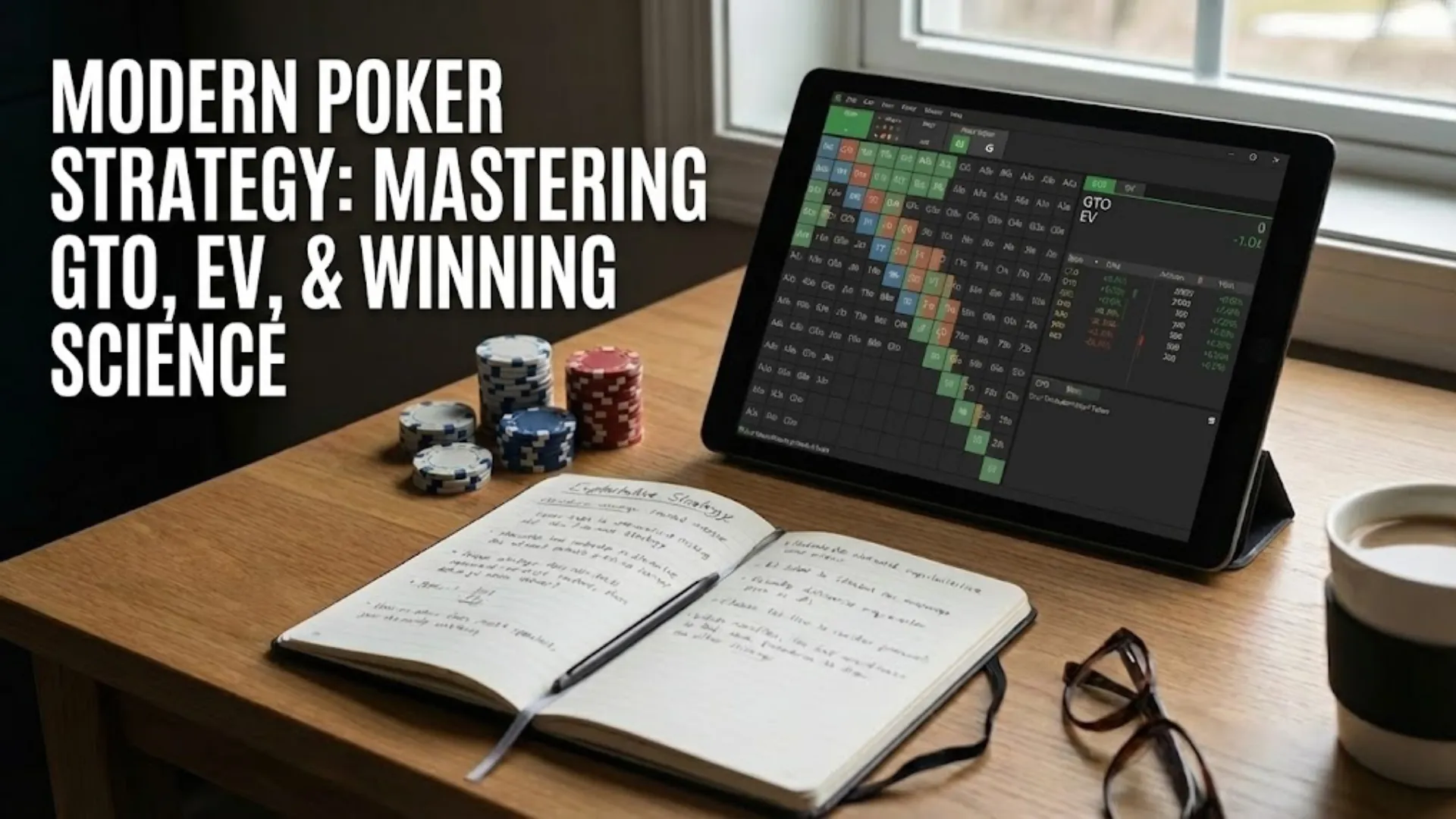
Top-tier players study GTO not necessarily to play like a computer, but to understand the baseline of unexploitable poker. They use solvers to learn which frequencies they should be bluffing or defending with. However, the true art lies in deviation.
A successful player identifies “leaks” in their opponents. If a “villain” folds too often to continuation bets, the hero increases their bluffing frequency beyond what GTO suggests. If an opponent only raises with the nuts, the hero learns to fold strong hands that would otherwise be calls. This ability to shift gears between unexploitable balance and predatory aggression is what defines the elite tier of players.
3. The Mental Game: Managing the Variance
Variance is the statistical reality that luck fluctuates. In the short term, a bad player can beat a world champion. This variance is often the downfall of technically skilled players who lack mental resilience.
The industry refers to this as the “Mental Game.” When variance hits and a player suffers a “bad beat,” the emotional reaction can lead to “tilt.” Tilt is not just anger. It is any deviation from rational strategy caused by emotion. It can manifest as playing too loose, playing too scared, or quitting a session too early.
Professionals treat their mental state as a distinct skill set. They utilize routines such as meditation, cool-down periods after sessions, and rigorous self-analysis to ensure their decision-making remains logical. They accept that downswings are mathematically inevitable and do not take bad luck personally.
4. Bankroll Management: The Business of Poker
Perhaps the most unglamorous yet vital aspect of a poker career is bankroll management. History is littered with talented players who went broke because they played stakes their funds could not support.
A professional treats their bankroll as their inventory. It is not money for rent or groceries. It is the tool required to work. Standard wisdom suggests having 50 to 100 buy-ins for the stakes one plays, particularly in high-variance formats like large-field tournaments.
Effective management also involves game selection. A successful player leaves their ego at the door. They look for tables where they have an edge. Playing against the best in the world might be good for glory, but playing against weaker competition is good for the bottom line. Protecting the bankroll ensures that a player stays in action long enough for their skill edge to materialize.
5. The “Lab” Work: Continuous Evolution
The poker meta changes rapidly. A strategy that crushed the games five years ago might be a losing strategy today. Successful players spend almost as much time studying as they do playing.
This off-table work is often called working in “the lab.” It involves reviewing hand histories, running situations through analysis software, discussing spots with a network of trusted peers, and staying updated on new trends.
This also extends to mastering different variants. While No-Limit Hold’em is the standard, mixed games like Omaha or Short Deck are gaining popularity. A versatile player who understands the nuances of multiple formats can find value in games that specialists might ignore.
6. Physical Endurance and Lifestyle
The stereotype of the unhealthy and chain-smoking gambler is fading. Modern tournaments can last for twelve hours a day and sometimes span weeks. Mental fatigue leads to costly mistakes.
Top professionals now prioritize physical health to sustain mental acuity. Cardiovascular exercise, proper nutrition, and adequate sleep are directly correlated with the ability to maintain focus during the grueling late stages of a tournament. When the blinds are high and the pressure is on, the player with the clearer mind often holds the decisive advantage.
Conclusion
Success in poker is rarely an accident. It is the result of a deliberate and professional approach to a complex game. It requires the humility to learn, the discipline to fold, the courage to bluff, and the resilience to weather the storm of variance.
For those looking to transition from the rail to the table, the journey begins not with the cards you are dealt, but with the mindset you cultivate. The game is waiting.
Stay tuned to PokerOffer for more strategy guides, industry news, and analysis.